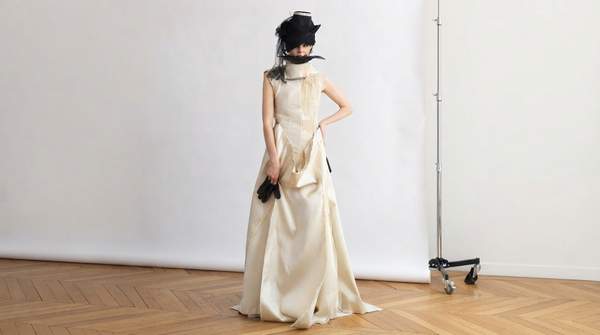
By 1970, the number of haute couture houses had plummeted, a direct consequence of the very strict rules designed to protect its exclusivity. While these regulations aimed to safeguard haute couture's unique Parisian identity, they inadvertently contributed to a significant decline in the number of couture houses. This created a profound tension between preserving an artisanal craft and navigating a shifting commercial landscape. As the fashion industry continues its global expansion and democratization, haute couture will likely adapt its rigid structures, potentially redefining "couture" for a new era of luxury.
The Birth of High Fashion
In 1858, Charles Frederick Worth established the first haute couture house in Paris, a pivotal moment that cemented the city's future as the global epicenter of fashion, according to Harper's Bazaar. Worth innovated by designing collections presented on live models, a departure from bespoke tailoring that allowed clients to select garments rather than simply commission them. This approach redefined the designer's role, shifting it from mere tailor to creative visionary.
To protect this burgeoning industry, Le Chambre Syndicale de la Haute Couture was established in 1868. This organization safeguarded high-fashion by setting specific standards for couture houses, ensuring quality and exclusivity, as reported by Harper's Bazaar. These foundational efforts solidified Paris as the undisputed capital of high fashion, laying groundwork for a formal regulation that would both protect its unique craft and, paradoxically, introduce future challenges to its very existence.
The Legal Shield and Post-War Revival
The designation 'Haute Couture' became a legally registered designation of origin on January 23rd, 1945, according to FHCM. This legal protection aimed to formalize and preserve the unique artistry and craftsmanship of Parisian high fashion. Simultaneously, new specifications for Le Chambre Syndicale de la Haute Couture were established in 1945, requiring member houses to produce made-to-order designs, maintain ateliers with at least 20 staff, and present at least 35 runs each season, as detailed by Harper's Bazaar. These dual actions — legal formalization and stringent operational rules — sought to elevate couture's status, yet the latter would later pose significant challenges to its sustainability.
Following these stringent regulations, Christian Dior's 'New Look' collection in 1947 revived France's fashion industry after wartime austerity, according to Harper's Bazaar. The collection brought a renewed sense of glamour and opulence, capturing the public's imagination and re-establishing Paris as a beacon of style. While Dior's triumph solidified haute couture as a protected art form and a powerful symbol of French elegance, the very rigid operational rules established just two years prior would later prove challenging for many houses, creating a paradox of simultaneous resurgence and underlying vulnerability.
From Exclusive Craft to Global Sensation
Haute couture evolved from a specialist Parisian dressmaking craft into an international business sensation, as noted by Cambridge. This transformation broadened its reach and influence far beyond its original clientele, attracting global attention and investment. Its meticulous craftsmanship and exclusive designs became aspirational benchmarks for luxury worldwide, inspiring ready-to-wear lines and accessories. This global recognition allowed haute couture to transcend its local origins, becoming a universal symbol of luxury and craftsmanship. Yet, this expansion created a paradox: its global presence grew even as its domestic foundation began to experience pressures, hinting at an unsustainable model for its original houses.
The Paradox of Protection: Decline and Adaptation
The number of couture houses dropped significantly by 1970, with many designers citing the strict rules of Le Chambre Syndicale de La Haute Couture and the rise of mass-production as contributing factors, according to Harper's Bazaar. The decline underscored a fundamental tension: the very mechanisms designed to safeguard high-fashion ultimately undermined the quantity of the entities they sought to protect, prioritizing an idealized exclusivity over numerical strength. The 1945 imposition of rigid operational requirements, such as the 20-staff atelier rule, inadvertently created insurmountable barriers to entry and sustainability, shrinking the very industry they aimed to elevate.
Haute couture's paradoxical transformation into a global luxury business while its original houses dwindled by 1970 offers a critical lesson: industries that fail to reconcile their exclusive identity with the broader market's shift towards accessibility risk becoming globally recognized brands with a shrinking domestic foundation. The decline in couture houses highlights the profound challenge of maintaining strict traditional standards amidst the economic realities of a changing fashion industry.
Understanding Couture's Calendar
When are haute couture collections presented?
Haute Couture collections are presented twice annually, in January and in July, as confirmed by FHCM. This biannual schedule maintains a distinct rhythm separate from ready-to-wear fashion weeks, underscoring the unique, labor-intensive nature of couture creations and their deliberate distance from commercial seasonality.
The Future of Bespoke Luxury
As haute couture navigates its future, its enduring appeal and influence on global luxury will likely depend on its ability to adapt traditional craftsmanship to contemporary client expectations, as demonstrated by houses like Chanel and Dior, ensuring relevance beyond 2026.