In February 1955, Coco Chanel unveiled the 2.55, a handbag that redefined luxury accessories with its revolutionary design featuring a fully metal chain strap and the distinctive Mademoiselle lock, according to saclab. The 2.55 established a new benchmark for elegance and practicality, influencing the craftsmanship of iconic luxury handbag designs for decades to come.
Luxury handbags are celebrated for their timeless, hand-finished construction, yet their iconic designs are constantly reinterpreted and updated by new creative directors. The constant reinterpretation and updating of designs creates a tension between preserved artisanal quality and evolving aesthetics.
Iconic luxury handbags will likely continue to command high value and cultural relevance by strategically balancing their heritage craftsmanship with contemporary design reinterpretations. The strategic balancing of heritage craftsmanship with contemporary design reinterpretations ensures their enduring appeal in a competitive global market.
The Genesis of an Iconic Design
Coco Chanel introduced the 2.55 in 1955, a groundbreaking accessory featuring a unique Mademoiselle lock and a fully metal chain strap, according to saclab. The 2.55 design departed from the era's common clutch styles. Its quilted exterior and internal compartments demonstrated a new standard for both aesthetics and utility. The 2.55's functional innovations, like the hands-free strap, fundamentally shifted how women interacted with their accessories, establishing a blueprint for luxury handbag design for decades.
The Enduring Art of Hand-Finished Production
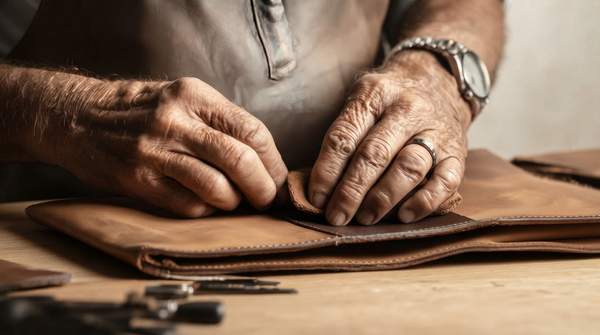
Luxury pieces rely on high-quality, often handmade components, according to realstyle. The reliance on high-quality, often handmade components ensures superior durability and aesthetic appeal. Hand-finished details and time-honored craftsmanship consistently prevail over automation in luxury handbag production, emphasizes sanroccoitalia. The reliance on skilled artisans, who carefully select and manipulate materials to exacting standards, distinguishes these items. The reliance on skilled artisans not only guarantees consistent quality but also imbues each bag with a unique narrative, a crucial differentiator in a market increasingly saturated by machine-made goods.
Evolution and Reinterpretation of Iconic Codes
Karl Lagerfeld's 1980s redesign of the Classic Flap introduced the iconic interlocking CC clasp and a leather-interwoven chain, according to saclab. Karl Lagerfeld's 1980s redesign proved that even foundational designs require substantial modification to stay current. Chanel handbags continue to evolve under creative directors like Virginie Viard and Matthieu Blazy, consistently reinterpreting iconic codes for contemporary life. The strategic evolution of Chanel handbags by successive designers prevents designs from becoming static artifacts. It ensures iconic handbags remain culturally resonant and desirable, a testament to luxury brands' ability to adapt without diluting their heritage.
The Price of Authenticity: Luxury vs. Mass Market
The Rainbow Fan Shaped HandBag, priced at $250.00, and the Rainbow Brown Crossbody Bag, at $200.00, both noted by Zornna, represent a fundamental departure from luxury. The significantly lower price points of the Rainbow Fan Shaped HandBag and Rainbow Brown Crossbody Bag underscore the mass market's prioritization of affordability and rapid production over meticulous hand-finishing and premium materials. The distinction between luxury and mass-market items is not merely about cost; it reveals a divergence in production philosophies. While mass-market items offer accessibility, they cannot replicate the heritage, craftsmanship, and continuous design evolution that define and justify the investment in true luxury accessories.
Frequently Asked Questions
What makes a luxury handbag high quality?
High-quality luxury handbags feature superior materials, such as full-grain leather or exotic skins, and intricate internal construction. Perfectly aligned stitching, hand-painted edges, and custom hardware contribute to their excellence and durability. These elements ensure the bag withstands time and usage.
How are designer handbags made?
Designer handbags are made through a multi-stage process involving skilled artisans. This includes precise pattern cutting, meticulous leather preparation, hand-stitching, and careful assembly of components. Each step requires specialized tools and expertise, culminating in a product embodying artisanal precision.
What are the most iconic handbag designs of all time?
Beyond the Chanel 2.55 and Classic Flap, iconic designs include Hermès Birkin and Kelly bags, Louis Vuitton Speedy, and Lady Dior. These bags are recognized globally for their distinctive aesthetics, rich histories, and enduring cultural impact. Each represents a pinnacle of design and craftsmanship.
The Enduring Legacy of Luxury Craftsmanship
Companies like Chanel offer a masterclass in controlled evolution. True luxury strategically updates designs while maintaining artisanal purity, as saclab's account of design evolution and sanroccoitalia's emphasis on craftsmanship confirm. The premium price of iconic luxury handbags stems from continuous investment: painstaking hand-craftsmanship and a dynamic reinterpretation of their core aesthetic, illustrated by saclab's historical overview and realstyle's mention of handmade components.
The market for iconic luxury handbags, exemplified by Chanel's strategic approach, will likely continue to thrive. Value resides in this blend of heritage and calculated evolution, ensuring lasting desirability and a significant cultural footprint for years to come.