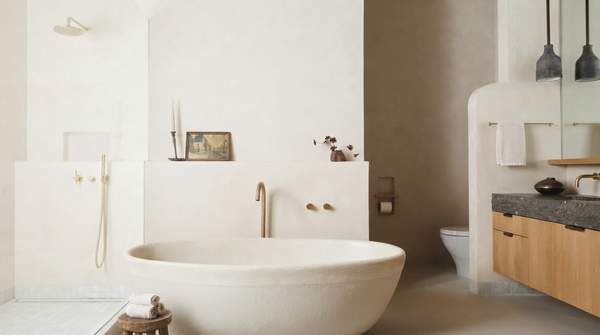
The US green construction market has expanded tenfold since 2006, now reaching an approximate value of $100 billion, according to theguardian. This growth indicates a significant shift towards sustainable design materials. Corporations are also exceeding their own ambitious sustainability goals; Du Pont achieved $10 billion in green-materials revenue by 2011, surpassing its 2015 target of $8 billion for products made from non-depletable resources.
Despite this momentum, sustainable materials can initially increase upfront costs by 2–7%, as reported by Ingenious. However, these choices deliver substantial long-term operational savings and market value premiums, creating a clear financial incentive.
Companies and consumers who prioritize sustainable materials will increasingly gain a competitive edge and realize substantial financial and environmental returns, making eco-conscious choices the new standard for design and construction in 2026.
Innovating with Nature: New Materials and Design Principles
The rapid expansion of the green construction market and major corporations exceeding their sustainability goals demonstrate a powerful, accelerating shift towards eco-conscious materials. From bio-based alternatives to resource-efficient manufacturing, companies are actively developing and implementing diverse solutions for sustainable living.
1. Guayule
Best for: Performance apparel, eco-conscious consumers.
Patagonia is releasing a wetsuit made from a 60:40 blend of guayule and conventional Neoprene, according to theguardian. This development followed a five-year search for a sustainable alternative. Guayule, a desert shrub, offers a natural rubber source, reducing reliance on petroleum-based materials.
Strengths: Bio-based, reduces fossil fuel dependency, high-performance alternative. | Limitations: Requires specific agricultural conditions, long R&D cycles for new applications. | Price: Likely higher initially due to innovation and limited scale.
2. Wheat Straw
Best for: Automotive interiors, consumer goods, plastic reinforcement.
Ford has successfully replaced glass fibers with wheat straw to reinforce plastics used for bins and liners, as reported by theguardian. This material utilizes agricultural waste, diverting it from landfills and reducing the need for virgin materials.
Strengths: Utilizes agricultural waste, reduces reliance on synthetic fibers, lightweight. | Limitations: Specific processing requirements, potential for varying material properties. | Price: Cost-effective due to waste stream utilization.
3. Non-depletable Resources
Best for: Large-scale manufacturing, corporate sustainability initiatives.
Du Pont achieved $10 billion in green-materials revenue by 2011, surpassing its 2015 target of $8 billion for products made from non-depletable resources, according to theguardian. This category encompasses materials derived from sources that replenish naturally or are inexhaustible on a human timescale.
Strengths: Long-term resource security, reduced environmental impact, strong market growth. | Limitations: Broad category, specific material properties vary widely. | Price: Varies significantly by material, but offers long-term stability.
4. Mass Timber
Best for: Commercial and residential construction, structural elements.
Mass timber, including cross-laminated timber (CLT) and glulam, offers a sustainable alternative to concrete and steel in construction. It can shorten construction timelines by up to 25%, according to Ingenious. This material sequesters carbon, contributing to lower embodied energy in buildings.
Strengths: Carbon sequestration, faster construction, aesthetically appealing. | Limitations: Building code adoption varies, fire resistance concerns require specific engineering. | Price: Competitive with traditional materials, with potential for savings in construction time.
5. Engineered Wood
Best for: Structural and non-structural building applications, furniture.
Engineered wood products, such as plywood, OSB, and laminated veneer lumber, maximize the use of timber resources. Like mass timber, these materials can shorten construction timelines by up to 25%, as reported by Ingenious. They often use smaller, faster-growing trees or wood waste.
Strengths: Efficient resource use, structural stability, reduced waste. | Limitations: Contains adhesives, moisture sensitivity. | Price: Generally cost-effective and widely available.
6. Existing Materials for Reuse
Best for: Home renovation, small-scale construction, artistic projects.
Seeking existing materials for reuse represents one of the most eco-friendly actions for a home, according to Elemental. This approach minimizes waste and the energy associated with manufacturing new products, extending the life cycle of resources.
Strengths: High environmental benefit, unique aesthetic potential, cost savings. | Limitations: Availability can be inconsistent, requires careful inspection and preparation. | Price: Often low or free, depending on sourcing.
7. Recycled Materials
Best for: Packaging, consumer products, building insulation.
Recycled materials are identified as a 'low-impact material,' according to Net Zero Action. and laundry products by 2030, shifting to renewable or recycled carbon, such as from recycled plastics.
Strengths: Reduces landfill waste, conserves virgin resources, lower embodied energy. | Limitations: Quality can vary, collection and sorting infrastructure needed. | Price: Often competitive, can fluctuate with market demand for recyclables.
8. Bioplastics
Best for: Packaging, disposable items, some consumer electronics.
Bioplastics are identified as a 'renewable material' and 'low-impact material' by Net Zero Action. Derived from biomass, they offer an alternative to petroleum-based plastics, reducing carbon footprint.
Strengths: Renewable resource base, reduced carbon emissions, biodegradable options. | Limitations: Degradation conditions vary, specific recycling streams needed, performance can differ from conventional plastics. | Price: Generally higher than conventional plastics, but decreasing.