Dolgopiatova Interior Design Designs Artistic Notary Office

In a surprising move for a traditionally staid profession, notary Anna Bakay's new 88-square-meter office, designed by Dolgopiatova Interior Design, is slated for a 2025 completion.

LB
Luca Bianchi

April 21, 2026 · 7 min read

A modern, artistic notary office designed by Dolgopiatova Interior Design, featuring abstract art and minimalist furniture.

In a surprising move for a traditionally staid profession, notary Anna Bakay's new 88-square-meter office, designed by Dolgopiatova Interior Design, was completed in 2025. This project emphasizes artistic flair over mere function. Dubbed 'The Artistic Office of a Notary,' it directly challenges conventional perceptions of professional workspaces and their underlying aesthetic philosophies. This undertaking signals a deliberate pivot towards aesthetic distinction in a field historically valuing pure utility and conservative design principles. The choice to brand such a space explicitly as 'artistic' indicates a strategic investment in a unique professional identity, setting it apart from traditional notary environments.

Notary offices typically prioritize pure functionality, focusing primarily on efficiency, security, and a conservative aesthetic that conveys trustworthiness and reliability. However, the Dolgopiatova Interior Design project for Anna Bakay's space instead foregrounds artistic and bespoke interior design. This approach creates a tension between established professional norms and an emerging desire for unique client experiences, pushing the boundaries of what a professional environment can be. The project directly contrasts the purely utilitarian designs often seen in such practices, where cost-efficiency traditionally dictates aesthetic choices.

This project suggests a future where professional service environments increasingly leverage design as a critical differentiator, potentially setting new standards for client experience and brand identity. This undertaking challenges the long-held notion that functionality alone suffices for such practices, particularly as client expectations evolve. Even in traditionally conservative sectors, bespoke design is becoming a critical differentiator, forcing professionals to reconsider how their physical spaces communicate value and attract a modern, aesthetically conscious clientele, as demonstrated by the 88 m² 'Artistic Office of a Notary' project for Anna Bakay.

The Project at a Glance

  • The Artistic Office of a Notary project has an area of 88 m², according to ArchDaily.

This precise dimension highlights a focused approach to crafting an intimate yet highly functional space. It is tailored specifically for a notary's practice, ensuring every square meter serves a purpose while contributing to the overall aesthetic. The compact 88 m² size demonstrates a deliberate choice to invest significantly in high-concept design, showing that aesthetic ambition is not limited to large-scale corporate ventures. This suggests that even small, individual professional entities are now adopting bespoke aesthetics, moving beyond the traditional focus on pure functionality. Such an investment indicates a strategic shift towards creating a distinct brand identity through physical space, even in limited areas.
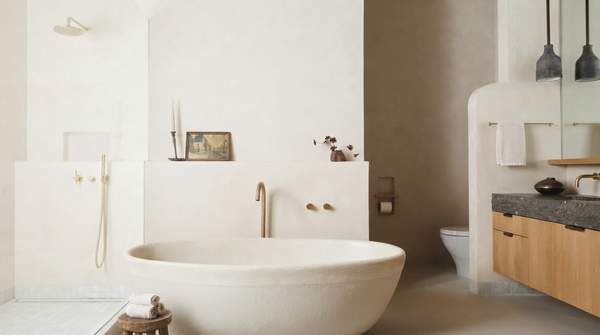

The project's deliberate branding as 'The Artistic Office' for an 88 m² space further suggests that individual practices are investing in high-concept design as a key differentiator. This strategy moves beyond what was once solely the domain of large corporate entities. The project’s existence confirms a growing appreciation for bespoke design in unexpected professional contexts, signaling a broader trend in how professional value is communicated through thoughtfully curated environments. This commitment to design reflects an understanding of its power to influence perception and client engagement.

A Glimpse into the Future of Professional Spaces

The 'Artistic Office of a Notary' project, designed by Dolgopiatova Interior Design, was completed in 2025, according to ArchDaily. This specific completion date positions the project as a forward-thinking endeavor within the realm of commercial interior design. It offers a tangible preview of future trends in professional interior design, particularly within traditionally conservative sectors that have historically resisted aesthetic innovation. The anticipation of client needs for an enhanced aesthetic experience, rather than just basic utility, is clearly evident in this timeline and the project's overarching design philosophy.

The 2025 completion suggests that professional service providers are actively anticipating and catering to a client base that increasingly values aesthetic experience alongside traditional utility. The project's emphasis on 'artistic flair' indicates a significant shift in competitive strategy. Physical environments themselves become potent tools for client acquisition and brand building, even within compact spaces like a notary's office. The 2025 completion suggests that the future competitive landscape for professional services will increasingly hinge on curated client experiences and aesthetic appeal, rather than just service quality, compelling firms to invest in their physical branding as a core business strategy.

The forward-looking nature of this project challenges the idea that professional offices must remain static in design or adhere strictly to utilitarian principles. Instead, it posits that design can be a proactive element in attracting and retaining clients. Strategic foresight highlights a growing understanding that the physical manifestation of a business directly impacts its perceived value and modernity. The commitment to such a distinctive design, finalized in 2025, positions Anna Bakay's office at the leading edge of this evolving professional aesthetic, setting a new precedent for others to follow.

Why an 'Artistic Office' for a Notary?

The designation of Anna Bakay's workspace as 'The Artistic Office' for an 88 m² space marks a significant departure from conventional professional aesthetics. Notary offices have historically adopted purely functional and often conservative designs, prioritizing trust, efficiency, and an unassuming presence over visual appeal. This new emphasis on artistic interior design directly challenges the long-held notion that such services require only utilitarian environments to convey professionalism and reliability. Even in traditionally conservative sectors, bespoke design is becoming a critical differentiator, compelling professionals to reconsider how their physical spaces communicate value and attract a modern, discerning clientele, as demonstrated by the project.

This deliberate branding and design choice suggests that small, individual practices, like that of a notary, are now investing in high-concept design. Such investment serves as a key differentiator, a strategy previously associated more with large corporate entities or creative industries seeking to stand out. The decision to prioritize an artistic aesthetic in a compact 88 m² setting implies a profound strategic shift. The physical environment itself transforms into a tool for client acquisition and brand building, even in relatively small professional spaces. This approach recognizes that clients seek not just competent service, but also an engaging, comfortable, and aesthetically pleasing experience that reflects positively on the service provider.

The combination of a traditionally staid profession with a bespoke, artistic interior design implies a change in competitive strategy. The aesthetic appeal of the office becomes an integral part of the service offering. It moves beyond merely providing a functional space for transactions to creating an immersive brand experience. The design philosophy reflects an understanding that a thoughtfully designed environment can enhance client comfort, build stronger rapport, and ultimately differentiate a practice in a competitive market. The focus on artistry ensures the space is memorable, contributing positively to the notary's professional identity and client retention.

Anticipating the Impact

The successful realization of Anna Bakay's 'Artistic Office' could inspire other traditional professions to invest in distinctive interior design. This project has the potential to foster a new standard for client environments across various sectors, from legal practices to financial advisories and medical consultation rooms. The explicit focus on aesthetic appeal, moving beyond mere functionality, may become a benchmark for modern professional spaces. This approach recognizes the growing importance of client experience in service delivery and how physical surroundings contribute significantly to overall satisfaction and perceived quality of service.

The 2025 completion suggests that the future competitive landscape for professional services will increasingly hinge on curated client experiences and aesthetic appeal. This extends beyond just service quality and professional competence, becoming a primary driver of client choice. Firms will likely feel compelled to invest in their physical branding to remain competitive and attract a discerning clientele. The Dolgopiatova Interior Design project thus serves as a bellwether, signaling a broader evolution in how professional identity is constructed and perceived through thoughtful design. The physical office becomes an active participant in brand communication and client engagement, underscoring a shift.

The pioneering project highlights a broader trend where the workspace itself becomes an extension of a professional's brand. It suggests that neglecting interior design could become a competitive disadvantage for traditional professions, leading to a loss of potential clients. The emphasis on bespoke, artistic elements implies a future where personalized environments are not luxuries, but necessities for client engagement and business growth. By 2025, such design philosophies, exemplified by Dolgopiatova Interior Design for Anna Bakay's office, could become the norm.ld redefine expectations for professional service environments globally, influencing design standards across multiple industries.

Your Questions Answered

What are the key features of the Dolgopiatova Interior Design office?

The Dolgopiatova Interior Design project for Anna Bakay's office focuses on creating an environment that enhances the client experience through unique aesthetics. It deviates from the typical neutral palettes often found in traditional notary offices, aiming to evoke a sense of thoughtful design. While specific design elements like custom furniture, unique lighting fixtures, or bespoke material selections are not detailed in general project descriptions, the overall intent is to fuse functionality with artistic expression, making the space distinct and memorable for every visitor.

Where is the Dolgopiatova Interior Design Artistic Office located?

The specific geographic location of Anna Bakay's notary office, designed by Dolgopiatova Interior Design, is not publicly specified in the project descriptions available. However, the conceptual impact of such a design project extends beyond a singular location. It demonstrates a broader trend in professional service aesthetics that can be applied globally. This emphasis on thoughtful design's universal appeal transcends geographical boundaries, making its principles relevant regardless of location.

What makes this notary office design unique?

This notary office design is unique because it applies principles of artistic and bespoke design to a sector traditionally defined by pure functionality. Studies suggest that well-designed office spaces can enhance creativity and productivity, according to BBC Worklife and CIPHR. The Dolgopiatova project for Anna Bakay's office integrates these considerations, aiming to create an environment that not only impresses clients but also potentially fosters a more engaging and inspiring workspace for the notary herself, a concept rarely seen in this profession.