How AI Is Transforming Interior Design: Personalized Planning & Trends

What once took weeks of a designer's time and thousands of dollars to visualize a new room layout can now be generated in minutes for as little as $0.

LB
Luca Bianchi

April 18, 2026 · 4 min read

A modern, AI-enhanced living room showcasing personalized design options on a holographic display, blending comfort and technology.

What once took weeks of a designer's time and thousands of dollars to visualize a new room layout can now be generated in minutes for as little as $0.15 per render, or even for free. RoomGPT's Basic plan, for instance, costs $15 per month for 100 renders, equating to $0.15 per render, according to AI Smart Decor. This new accessibility extends to platforms like AI Smart Decor, which offers a free tier for full AI room redesigns from photo uploads, access to over 30 design styles, and standard resolution exports.

AI 3D visualization technology has compressed design timelines from weeks to mere minutes, as reported by virtualspaces. This immediate availability of detailed visual proposals democratizes a process once exclusive to professional designers. Yet, while interior design visualization has become instant and widely accessible, the path to high-quality, commercially usable results still involves navigating tiered pricing and feature limitations. Companies are rapidly integrating AI to offer unprecedented speed and affordability in design visualization, which will likely force traditional designers to pivot towards higher-value, human-centric services like curation, material sourcing, and project management.

The AI Design Revolution: Streamlining Creativity and Personalization

AI is transforming interior design by automating initial concept generation and personalizing planning. It streamlines the process by generating design concepts, suggesting color palettes, arranging furniture layouts, and visualizing spaces in 3D, according to Planner 5D. These tools analyze style preferences, space constraints, and user inputs, offering tailored recommendations that accelerate early design phases and provide clients with numerous options quickly. While AI does not dictate specific trends for 2026, it significantly influences how designers adapt to and personalize them. AI assists in analyzing emerging patterns, informing design choices that align with contemporary aesthetics. This allows for rapid iteration and customization within popular styles, ensuring designs remain relevant and personalized.

Beyond basic layouts, AI offers both inspiration and practical modeling. AI-driven image creation tools like Midjourney and DALL-E generate diverse interior design styles and decoration inspiration. Furthermore, AI design tools, such as Planner 5D, allow users to upload photos of existing furniture or decor and convert them into 3D models. This expands AI's utility from abstract concept to concrete visual and spatial planning, enabling a more dynamic and responsive design process.
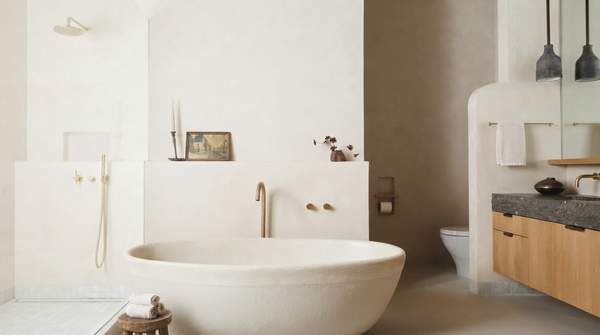

Beyond the Free Tier: Understanding AI Design Costs and Limitations

The promise of free AI design often carries significant limitations for professional application. While AI Smart Decor offers basic redesigns without cost, its Pro plan, priced at $29 per month or roughly $22 annually, unlocks unlimited renders, 4K exports, and commercial rights. This pricing structure clarifies that AI's true professional value extends beyond mere accessibility; it enables rapid, high-quality, and legally usable iterations, fundamentally reshaping professional workflows and business models. This capacity also significantly reduces design risk. The ability of AI to generate multiple design interpretations almost instantly transforms the design process from a linear, labor-intensive cycle into rapid, iterative exploration, accelerating client feedback and minimizing costly revisions later in a project.

The speed of AI generation further emphasizes this value distinction, particularly for rapid iteration. AI interior design visualization technology transforms 2D floor plans and blueprints into 3D renders in seconds. AI tools can also generate multiple visual interpretations of a design prompt, such as 'a Scandinavian-style living room with oak furniture and afternoon light', almost instantly, as shown by vibe3d. This rapid conceptualization streamlines the client feedback loop, though commercial applications typically require higher-tier access.

The global AI in interior design market, valued at USD 1.3 billion in 2022, is projected to reach USD 5.7 billion by 2030, according to Grand View Research. The global AI in interior design market, valued at USD 1.3 billion in 2022 and projected to reach USD 5.7 billion by 2030, indicates a widespread and increasing integration of AI technologies across the design sector, validating the shift towards these advanced tools.

The commoditization of basic rendering skills by AI is an undeniable force. The dramatic cost reduction to as little as $0.15 per render, exemplified by RoomGPT, signals a rapid commoditization of basic interior design visualization. This compels traditional designers to pivot from technical execution to higher-value creative strategy and client relationship management. Designers must adapt by integrating AI tools into their workflow. Those who fail to embrace AI risk obsolescence, as manual processes cannot compete with AI's speed and iterative power. Embracing AI as a creative amplifier allows designers to focus on nuanced client relationships and bespoke material sourcing, redefining core competencies for success in this evolving sector.

Companies like AI Smart Decor will likely expand their premium offerings, further distinguishing professional-grade, commercially viable design outputs from free, basic visualization tools, thereby challenging traditional design models and emphasizing AI integration's strategic importance.