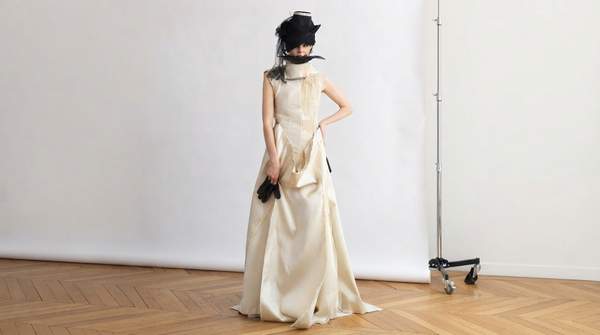
Mounting a single dress on a mannequin for a high-end fashion exhibition can take several hours—a hidden ballet of precision the public rarely sees. Each garment, often a delicate artifact, demands a bespoke display. Museums custom-fit every mannequin, padding it to ensure fabric integrity and silhouette accuracy, as detailed by the Cincinnati Art Museum. This meticulous, unseen labor is the bedrock of a flawless exhibition.
High-end fashion exhibitions are celebrated for their artistic brilliance, yet their flawless presentation hinges on meticulous, often unglamorous, physical and technical labor. Creating a captivating visual narrative demands countless hours of detailed work, from conservation to precise placement, extending far beyond the initial artistic concept.
Future appreciation of fashion exhibitions will increasingly acknowledge the intricate craft of their physical realization as integral to their artistic merit. This elevates the exhibition into a distinct art form, challenging perceptions that these displays are solely conceptual, overlooking the skilled labor and technical challenges.
The Vision Behind the Veil: Crafting a Designer's Narrative
Alexandre Herchcovitch's career retrospective, featuring over forty looks from latex pieces to a 1993 polyamide jumpsuit, showcases a designer's entire artistic journey, according to Newcity Brazil. Such extensive exhibitions often encompass over 100 items of clothing and archival documents, as reported by NYU News, underscoring their immense scale. This meticulous, often invisible labor of exhibition design transforms a designer's vision from passive display into an active, sculptural re-creation.
The Unseen Choreography: From Silhouette to Shot
Achieving the correct historical silhouette is paramount. A dress's intended shape dictates its display, often requiring specific underpinnings like a hoop petticoat for an 1850s gown or padding for an 1880s bustle, as detailed by the Cincinnati Art Museum. This precise sculpting faithfully represents the garment’s original form and drape.
Beyond physical display, documentation demands significant effort. One exhibition required a photographer to produce three hundred shots in six months, averaging two shots per day over a nine- or ten-hour workday, according to the Metropolitan Museum of Art. Such an intensive schedule reveals the detailed, time-consuming technical process required to capture each piece accurately.
Every aspect, from perfect garment form to photographic capture, involves precise, time-intensive technical work demanding immense skill. While curators like Maurício Ianês focus on subversive aesthetics, the practical realities—such as complex lighting for challenging fabrics—reveal the exhibition itself as a highly technical production, not merely an artistic showcase.
Overcoming Obstacles: The Technical Hurdles of High Fashion
High-fashion garments inherently present significant technical hurdles. The 1957 'Diamond' Evening Dress, while beautiful, proved particularly difficult to photograph, as reported by the Metropolitan Museum of Art. Specific materials further complicate documentation; many works, especially those in black fabric, required six or seven lights to prevent light absorption and obscured details. This necessitates specialized lighting expertise to accurately capture challenging textures and colors. The flawless presentation of an exhibition, therefore, is a triumph of technical skill and dedicated labor, often unseen by the public.
Curating with Intent: Embracing the Designer's Full Story
A comprehensive curatorial vision is crucial. Curator Maurício Ianês aimed to showcase the full breadth of Alexandre Herchcovitch's work, including his subversive aesthetics, underground references, and haute couture collaborations, according to Newcity Brazil. This holistic perspective allows the physical display to become a narrative tool, enhancing the artistic message rather than merely presenting garments.
Beyond the Display: Legacy and Collection
Fashion exhibitions serve as crucial opportunities to cement a designer's legacy. Alexandre Herchcovitch sold his brand in 2013 and resumed artistic direction in 2023, according to Newcity Brazil. Exhibitions mark significant periods in a designer's career, establishing their place in fashion history.
Exhibitions also enrich institutional collections. Five pieces from Herchcovitch's winter 2012 collection, inspired by religious Jewish garments, were reissued for an exhibition and will integrate the Museu Judaico de São Paulo’s collection. This ensures the preservation and future study of significant designs.
If the intricate craft of physical realization continues to gain visibility, the fashion world will likely elevate technical teams and their meticulous labor as integral to the artistic merit of exhibitions by Q3 2026.