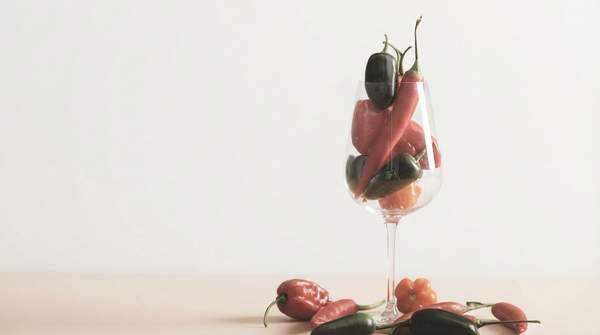
Pairing wine with Vietnamese, Thai, or Mexican food does not require memorizing lists. The reliable method is to identify a dish's dominant components—heat, acidity, richness, aromatics—and then choose a wine that either echoes those qualities or deliberately opposes them. A spicy Thai curry calls for a contrasting move: a slightly sweet, off-dry wine cools the heat. A rich, savory braised dish invites a complementary one, matched by weight and body. This guide explains both strategies and turns them into a repeatable decision framework, with worked examples for a Vietnamese bánh mì and a rich mole-style dish.
Understanding the Core Principles of Wine Pairing
Every successful pairing rests on balance: neither the food nor the wine should overwhelm the other. Wiens Cellars, a family winery that publishes pairing guidance, frames this as harmony of weight and body—a rich, full-bodied wine will flatten a delicate dish, while a light white may disappear against a hearty stew. The Wine Concierge, a retailer's pairing guide written by Leslie Frelow, makes the same point: start by matching the intensity of food and wine before fine-tuning anything else.
From there, a handful of wine characteristics do specific jobs. Acidity cuts through richness and refreshes the palate after fatty or creamy foods. Tannins—the astringent compounds in red wine—soften when paired with protein-rich dishes, which is why hearty, protein-and-fat-laden preparations can carry tannic reds. Residual sugar, the sweetness left in a wine, balances heat, salt, and acidity in food. Davis Estates, a Napa winery, compresses this into a working compass: acidity cuts richness, tannins soften proteins, and sweetness balances heat.
One more concept earns its place in any framework: the leading flavor. The Tasting Alliance's pairing guide argues that the cornerstone of a successful match is aligning the wine with the dish's dominant character—whether that is the aromatic spice, the richness of a sauce, or the primary ingredient. In practice, this means you pair with the sauce and seasoning, not just the protein on the plate.
Complementary vs. Contrasting Pairings: The Two Strategies
There are only two moves, and both work. A complementary pairing—also called a congruent pairing—matches similar flavors, textures, and intensities so that wine and food echo each other. The classic illustration, cited by both the Tasting Alliance and Wiens Cellars, is a buttery Chardonnay alongside a rich, creamy pasta dish: the wine's velvety texture mirrors the sauce's lushness, amplifying the shared quality. Kendall-Jackson's pairing guide offers the same logic with a rich Cabernet Sauvignon against a juicy, marbled steak, where the wine's boldness mirrors the dish's sumptuousness.
A contrasting pairing uses opposite characteristics to create balance through opposition. Here, a crisp, acidic wine such as Sauvignon Blanc cuts through the richness of a fatty fish, refreshing the palate with each sip. The most useful contrast for global cuisines is sweetness against heat: the Tasting Alliance describes how the sweetness of a Riesling gently counters the spice of a dish, and Davis Estates lists sweetness balancing heat among its core principles.
Neither strategy is superior. A culinary-school textbook used in hospitality training, published as part of a dining room and beverage management course, presents complement and contrast as the two fundamental approaches, noting that both work but create different experiences. The choice depends on what the dish needs: amplification of a pleasant shared quality, or relief from an intense one.
Flavor Profiles of Southeast Asian Cuisine
Southeast Asian cooking has a recognizable signature, and it differs from South Asian cooking in ways that matter for wine. Taste France Magazine, in a guide to matching French wines with global cuisines, draws the distinction: South Asian cuisines lean on chilis, pepper, and cumin, while Southeast Asian cuisines generally use more citrus and herbs—lime, cilantro, lemongrass, and tamarind. These dishes are typically lighter on the palate but carry pronounced aromatics and concentrated flavor.
That profile points clearly toward wine. Because the dominant components are citrus, fresh herbs, and often a degree of chili heat, the magazine's guidance is that citrus-driven, high-acid whites almost always pair well. When heat is the leading flavor, the contrasting strategy takes over: an off-dry wine's residual sugar tames the spice. For a Vietnamese bánh mì—savory meats, pickled vegetables, fresh cilantro, and often a touch of chili—the magazine suggests a palate-coating, off-dry Alsatian Riesling, which simultaneously refreshes through acidity and cools through sweetness.
Flavor Profiles of Latin American Cuisine
The evidence base characterizes Latin American pairing through general principles for rich, hearty food rather than a single regional profile, so the honest approach is to apply those principles to the dishes in front of you. Many iconic preparations—slow-cooked meats, cheese-heavy dishes, and complex sauces such as Mexican mole—are defined by richness, fat, and layered spice. The culinary-school text notes that dishes with substantial cheese or hearty, protein-rich preparations can support tannic reds, because the protein and fat balance the tannins' astringency.
For a rich, complex mole, the framework suggests a full-bodied red with enough fruit and structure to match the dish's weight, complementing its richness while its acidity refreshes between bites. This is an inference from the general principles—balancing richness with tannin and weight, and heat with fruit or a touch of sweetness—rather than a documented recommendation for mole specifically. The same caution applies to any Latin dish: analyze its actual leading flavors first, because a bright, lime-dressed ceviche behaves like a citrus-driven Southeast Asian dish, not like a braised one.
Decision Framework: Pairing Wine with Global Flavors
The framework below turns the two strategies into a repeatable method. First, identify the dish's dominant components; second, decide whether to complement or contrast; third, translate that choice into the wine characteristics required. The final column shows the reasoning applied to two worked examples.
| Step | Question to ask | If the answer is… | Choose a wine with… |
|---|---|---|---|
| 1. Identify the leading flavor | What dominates the bite—heat, acid, richness, or aromatics? | Citrus, herbs, aromatics (typical of Southeast Asian dishes) | Citrus-driven, high-acid whites, per Taste France Magazine's guidance |
| 2. Match weight | Is the dish light or rich? | Rich, fatty, protein-heavy (hearty Latin preparations) | Fuller body; tannic reds work when protein and fat balance the tannins |
| 3. Pick a strategy | Should the wine echo the dish or oppose it? | Heat is the leading flavor | Contrast: off-dry or sweet wine, whose residual sugar cools the spice |
| 4. Confirm the effect | Does each sip refresh or amplify? | Creamy or fatty texture | Contrast: crisp acidity to cut richness and refresh the palate |
| Worked example: bánh mì | Savory pork, pickled carrot and daikon, cilantro, chili heat | Acid and heat dominate; moderate richness | Off-dry, high-acid aromatic white—Taste France Magazine names an off-dry Alsatian Riesling |
| Worked example: mole-style rich dish | Deep sauce, layered spice, substantial body | Richness dominates with background heat | Full-bodied red with fruit and structure—an inference from general richness-and-spice principles, not a documented mole recommendation |
Notice how the two examples diverge. The bánh mì is a contrast case: acidity answers the pickles and herbs, sweetness answers the chili. The mole is primarily a complement case: the wine's body and fruit match the dish's weight, with acidity quietly doing contrast work against the sauce's richness. The framework, not the cuisine, determines the strategy.
Making Confident Global Wine Pairings
Readers should approach global wine pairing by first identifying the dominant flavor components of a dish and then consciously choosing a wine that either complements or contrasts those elements, rather than relying on pre-set lists. The measure of success is simple: the reader successfully applies the framework to suggest a wine style for a new, unlisted Southeast Asian or Latin American dish. The next time you face an unfamiliar menu—whether a herb-heavy Vietnamese noodle bowl or a cheese-rich Latin dish—run the four steps: leading flavor, weight, strategy, effect. If you can name the component you are addressing and the wine characteristic answering it, the pairing will hold even for dishes no guide has covered. Recommendations here are by style and characteristic, not specific bottles, and this is culinary guidance only.
Sources
- Wine Pairing with Local Cuisines: A Global Guide - Wiens Cellars — Wiens Family Cellars
- Food And Wine Pairing Menu Guide: Expert Tips for 2025 — The Wine Concierge
- Advanced Wine and Cuisine Pairings Around the World — Davis Estates
- The Ultimate Food & Wine Pairing Guide - The Tasting Alliance
- Essential Wine and Food Pairings Guide with Handy Chart — KJ
- Nicoletcollege
- A World Tour of Flavor: Matching French Wines with Global Cuisine Favorites — Taste France Magazine