How Multisensory Perception Creates Flavor in Food

Long before a first conscious taste, even in the womb, a baby's palate begins its intricate dance with flavor.

CR
Camille Rousseau

May 15, 2026 · 4 min read

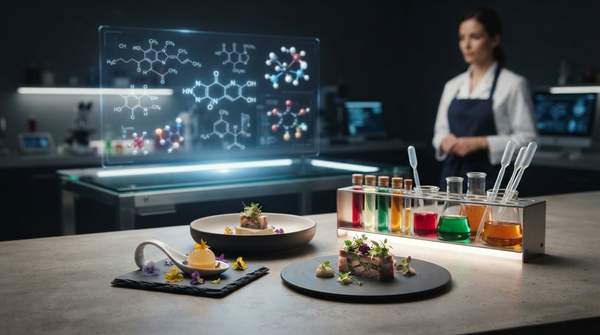
An artistic depiction of a human palate intertwined with swirling colors, textures, and aromatic wisps, symbolizing the multisensory creation of food flavor.

Long before a first conscious taste, even in the womb, a baby's palate begins its intricate dance with flavor. A mother's diet, rich with garlic, can predispose her infant to a lifelong affinity for its pungent warmth, as revealed by Nature. This profound, prenatal learning shatters the myth that flavor lives solely on the tongue, unveiling its deeply ingrained, learned nature.

Most of us equate flavor with the simple dance of taste buds, yet our experience of food is a complex, multisensory symphony—a blend of scent, sight, texture, and even the echoes of memory. It's a perception woven far beyond mere chemical reactions on the tongue.

As science peels back the layers of this intricate, multisensory tapestry, our capacity to engineer, enhance, and personalize food experiences will transform. We are moving beyond simple chemical compounds, towards a holistic sensory design that truly captivates.

More Than Just Your Tongue: The Multisensory Symphony of Flavor

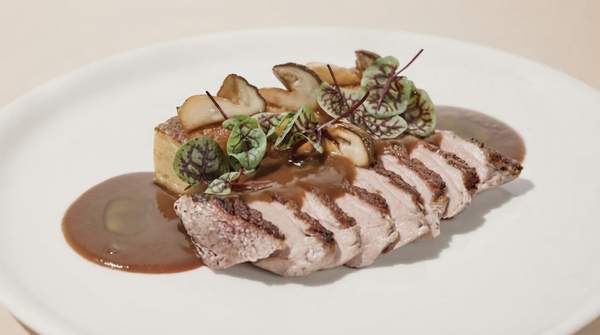
Before a morsel even touches the tongue, our eyes begin to taste. Visual cues sculpt our perception, shaping expectation and desire. Glimpsing high-calorie foods, for example, ignites stronger, more pleasurable neural responses than their low-calorie counterparts, even absent actual taste, as Nature reveals. This potent visual pre-conditioning means flavor is not just tasted, but seen. It's a holistic brain construct, where sight and sensory input intertwine to craft our complete experience, often swaying enjoyment more profoundly than taste alone. This insight confirms the food industry's shrewd investment in visually arresting packaging and presentation: it's not mere aesthetics, but a potent, pre-emptive strike to sculpt perceived flavor and consumer desire.

Unpacking Flavor: How Scientists Analyze What We Eat

Scientists, like culinary detectives, wield advanced techniques to unearth the hidden chemical symphony within our food. Tools such as headspace gas chromatography/mass spectrometry (HSGC-MS), GC×GC-MS, GC-IMS, and GC-O meticulously identify the volatile components that compose a food's unique aromatic signature, as detailed by PMC. This allows for a granular mapping of intricate chemical identities. Further research, for instance, has unveiled tissue-specific variations in shiitake mushroom flavor profiles, where machine learning can predict strains with perfect accuracy based solely on these volatile signatures, also cited by PMC. Such precision in mapping and predicting flavor profiles suggests a future where food authenticity can be verified at a molecular level, safeguarding culinary heritage and exposing counterfeits, or even allowing for the creation of hyper-personalized flavor experiences tailored to individual biologies.
The Elusive Art of Flavor Recreation: Why It's So Hard

Even with our sophisticated tools, perfectly recreating a food's full flavor signature remains an elusive art. Reconstituting flavor from isolated aroma and taste compounds faces a labyrinth of challenges: chemical transformations, shifting concentrations, intricate compound interactions, and the subtle embrace of the food matrix itself, as PubMed illuminates. Scientists also grapple with modeling the complex, invisible threads connecting a food's chemistry to its perceived flavor, PubMed notes. This dynamic interplay, a living dance of compounds within their natural setting, creates immense hurdles for faithfully capturing the authentic essence. The persistent struggle to replicate nature's nuanced 'flavor signature' implies that many 'natural flavor' labels offer an unattainable ideal, often guiding consumers towards a chemically crafted experience that, while pleasant, fundamentally diverges from its organic inspiration.

Personalizing Perception: How Your Flavor Experience Changes

Our personal flavor journey is a shifting landscape, profoundly altered by individual factors like age. Though taste bud numbers hold steady until after 75, a subtle yet pervasive decline in taste perception often accompanies aging, as Pressbooks reveals. This means the very sensitivity and interpretation of flavors can soften, even as receptors remain. For food creators, this evolving palate presents a profound challenge and opportunity: designing experiences that resonate not just with a universal taste, but with the unique, shifting sensory world of an aging consumer, perhaps unlocking new dimensions of comfort and nostalgia.

Common Questions: Uncovering Flavor's Hidden Depths

What are the five basic tastes and how do they contribute to flavor?

Sweet, sour, salty, bitter, and umami: these are the five primal tastes, registered by the tongue's dedicated buds. They form the bedrock of our initial perception, yet it is their intricate fusion with olfactory whispers, textural caresses, and visual allure that truly ignites the full symphony of flavor.

How does smell influence our perception of flavor?

The invisible tendrils of smell profoundly shape flavor, often accounting for up to 80% of our experience. As we chew, volatile aroma compounds journey from the back of the throat to the nasal cavity, awakening olfactory receptors. Here, scent and taste signals intertwine, weaving the rich tapestry of what we perceive as flavor.

What is the difference between taste and flavor?

Taste is the direct language of the tongue: sweet, sour, salty, bitter, umami. Flavor, however, is the grander narrative—a multisensory epic where taste converges with the haunting whispers of smell, the satisfying caress of texture, the subtle warmth or chill, the visual feast, and even the tender echoes of memory and emotion.

The Future of Flavor: Beyond Simple Taste

The persistent struggle to perfectly replicate nature's nuanced flavor signatures, a challenge rooted in the intricate dance of aroma and taste compounds, as PubMed details, illuminates a profound truth: flavor is far more than a mere sum of its chemical parts. It is a symphony orchestrated by the brain, integrating a lifetime of sensory inputs and learned contexts. Given that our flavor preferences are sculpted even before birth, and the sheer complexity of modeling this perception, food developers must transcend simple taste profiles. They must embrace the entire lifecycle of sensory learning and integration to truly forge a connection with consumers.

This profound understanding points towards a future where holistic sensory design, not mere chemical reconstitution, becomes the cornerstone for innovators like Givaudan or International Flavors & Fragrances. By 2026, these pioneers will craft complete sensory odysseys, recognizing that a truly satisfying flavor cannot be engineered from chemistry's isolated notes alone.