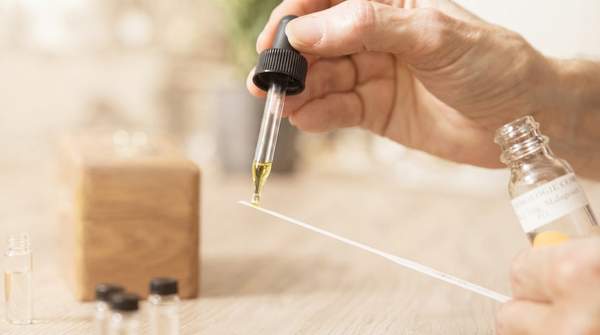
Before nylon and neoprene, the groundbreaking chemical research of Ružička and Carothers at DuPont Aromatics was already revolutionizing fragrance by creating large ring compounds. This work laid the foundation for modern perfumery, enabling the synthesis of complex, stable scents previously reliant on scarce natural extracts. Their early fragrance innovations proved crucial for chemical principles later underpinning major industrial materials.
Perfumery is often seen as a purely artistic pursuit, with master perfumers crafting intricate olfactory experiences. Yet, its evolution and future are inextricably linked to advanced organic chemistry. This tension reveals a common misconception about an industry deeply rooted in scientific advancement.
Continued innovation in fragrance will increasingly depend on chemical synthesis, pushing the boundaries of possible and accessible scents.
In the early 20th century, Leopold Ružička and Wallace Carothers' foundational chemical research for perfumery actually underpinned their later achievements in synthetic steroids, nylon, and neoprene, according to American Scientist. This quest for new aroma molecules became a surprising crucible for major industrial chemistry breakthroughs. Their work initiated a paradigm shift: complex, long-lasting scents now rely on synthetic organic chemistry, not just natural extracts. This early perfumery innovation proved pivotal to broader scientific progress.
The Chemist's Palette: Why Science Leads the Scent
Ernest Beaux, the celebrated perfumer behind Chanel No. 5, declared decades ago that perfumery's future lay primarily with chemists creating new aroma chemicals and original notes, according to Fundamentals of Fragrance Chemistry. This vision confirms that modern perfumery's 'art' is a direct product of chemical synthesis. The industry sells the sophisticated legacy of organic chemistry; its artistic output relies on scientific innovation, not just artistic intuition. The perfumer's palette expands through laboratory breakthroughs.
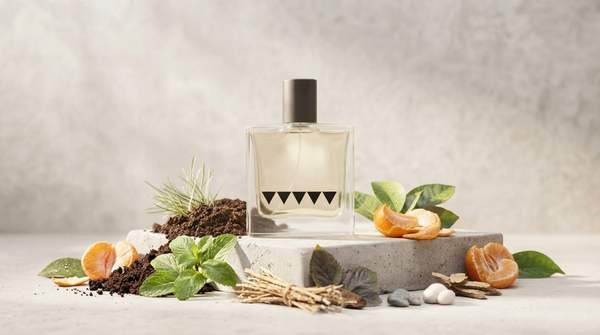
Building a Scent: The Molecular Architecture
Crafting a fragrance demands precise chemical understanding for stability and longevity. Perfume creation involves careful consideration of how aroma chemicals interact, especially reactive ingredients. Formulating a lasting scent goes beyond blending notes; it requires deep knowledge of molecular structures and their potential reactions. Chemists must engineer molecules that resist degradation and maintain aromatic integrity, ensuring the artistic vision is sustained through scientific rigor.
Overcoming Olfactory Obstacles: Chemistry's Solutions
Early 20th-century chemists struggled to understand natural aroma compounds. Leopold Ružička's groundbreaking synthesis of civetone and muscone provided crucial evidence for large ring chemical compounds, according to American Scientist. This achievement forced a fundamental rethinking of molecular ring structures, establishing them as three-dimensional. Ružička's work not only provided new scent molecules but also drove theoretical advancements in chemistry, solving a critical structural mystery and expanding the perfumer's palette.
Innovating New Notes: The Role of Organic Synthesis
Building on Ružička's theoretical advancements, Wallace Carothers translated this knowledge into industrial application. At DuPont Aromatics, he developed methods to create large ring chemical compounds for fragrances, according to American Scientist. This industrial synthesis provided perfumers with an unprecedented toolkit, enabling consistent production of complex molecules in quantity. This direct application of advanced organic chemistry fundamentally changed perfumery, making previously unimaginable scents chemically feasible and establishing a pathway for continuous innovation.
Art vs. Science: Answering Common Questions
What are the artistic elements in perfumery?
Beyond the chemistry, artistic elements in perfumery involve the creative composition of scent notes to evoke emotions or tell a story. A perfumer, often called a "nose," selects and balances various aroma chemicals and natural extracts to create a harmonious and expressive olfactory experience. This artistry includes understanding scent families, cultural preferences, and the psychological impact of different aromas.
How are unique fragrances developed?
Unique fragrances are developed through an iterative process that combines novel synthetic molecules with carefully selected natural ingredients. Perfumers often begin with an inspiration or concept, then experiment with different combinations and concentrations of aroma compounds. This blend of scientific possibility and creative vision allows for the creation of distinctive and memorable scents that stand apart in the market.
What is the role of scent in personal identity?
Scent plays a significant role in personal identity by acting as a powerful, non-verbal form of self-expression and memory association. An individual's signature fragrance can become deeply intertwined with their persona, evoking specific moods or recalling past experiences for themselves and others. This connection makes fragrance a deeply personal choice, often reflecting one's character, aspirations, or even current emotional state.
Driven by continuous advancements from leaders like Givaudan and Firmenich, the future of fragrance in 2026 and beyond will likely see an ever-expanding palette of novel, sustainable, and complex scents, blending scientific ingenuity with artistic aspiration.